Art Therapy for Adults
Published on ClinicLee, reproduced here in full.
Source article updated on 8 November 2026.
Art therapy for adults is a form of emotional and psychological therapy that combines conversation with creating in colour, such as drawing, or working with materials, such as sculpture. You do not need to know how to draw or make art: creating gives space to things we have no words for and allows what arises within to be expressed freely, without necessarily beginning with conscious thought. Art allows us to create, express our inner world and look at it from an outside perspective.
“But I do not know how to draw,” a new client told me.
“Then what brought you here?” I asked.
“There is something inside that I feel needs to come out. Something I cannot express in words.”
With these words, she described what had brought her to art therapy. Alongside her concern about drawing, she wanted to express something that had not yet found a way out.
People come to art therapy for different reasons: anxiety, difficulties in relationships, low self-confidence, uncertainty, feeling stuck, loneliness, depression, a search for meaning, or a wish to gain vitality and strength through creating. Sometimes there is a need to understand afresh: Who am I today? What matters to me? What is missing, and what do I wish for myself?
Creating in art therapy offers a distinctive way to communicate and express feelings. Alongside conversation, there is an encounter with colours, pencils, clay and other materials. The hand touches, chooses and acts, and the eye can look at what has been made, sometimes from a distance that allows something new to be seen. Contact with materials, together with the therapist’s presence, creates an experience in which a person can express their inner world through spontaneous images of the conscious and unconscious. The art materials and the work in the room are present as a third object alongside the therapist and client, offering space for feelings that are difficult to hold inside or to say directly to another person. Sometimes it feels easier and safer to give these inner feelings a place on paper before speaking about them face to face. Anger, fear or longing can be placed there. Creating in this space from pain, anger or confusion can be experienced as healing.
But I do not know how to draw
Many of us stopped drawing in childhood. As children grow, they become more aware of other people’s gaze and responses. Sometimes these responses undermine their confidence in creating, and they draw with less spontaneity and pleasure. This can give rise to the feeling that drawing is “not for me”, but for people who “know how” to draw.
Perhaps this is why many people associate art therapy with children. Children do not always have words to express their feelings, and drawing is a natural form of expression for them. They usually approach it freely and playfully, with less criticism, becoming absorbed in what they are doing here and now.
As adults, we bring to creating the experience, awareness, depth and complexity we have gained over the years. Alongside this, however, we often judge and criticise what we make, try to understand it, or worry about what others will say. We may be preoccupied with thoughts and less able to give ourselves over to the experience here and now.
A different experience can develop in the therapeutic relationship: creating in the presence of an accepting, supportive gaze and feeling that we can bring ourselves as we are, without needing the drawing to be beautiful or successful.
Reconnecting with the self
Art therapy can be an opportunity to rediscover being here and now, to loosen criticism and control, to overcome the fear of “I do not know how to draw”, and to play and create with colour and materials without being afraid of not knowing in advance “what to draw” or “how it will turn out” - to trust the process.
Being present here and now while creating can help us be authentic and reconnect with ourselves, find relief from troubling thoughts, and act from our inner self rather than from “what we should do”. Being present means being more connected with the body and heart.
As adults, we sometimes also feel a need to return to places from childhood: to make room for experiences that were not possible then, encounter a painful experience and look for a way to care for it, or reconnect with something good that we miss.
Sometimes a childhood memory arises while drawing or looking at what has been made. A colour, line or shape may recall a place, an experience or a feeling we have not encountered for a long time. Something from the past gains a visual presence on paper, allowing us to stay with it and explore what it evokes in us today. In this way, it may become more accessible and understandable.
Through the drawing, we can ask: Where is the child I once was within me now? What quality wants to emerge again and return to my life - playfulness, curiosity, freedom or enthusiasm? And what from that time weighs on me and asks to be released?
Within the therapeutic relationship and the trust that develops, there can be room for both longing and pain, viewed from the perspective of who we are today.
Space for feelings
In the encounter with the therapist, and at a pace suited to the person, images often appear spontaneously on paper. Sometimes we understand them clearly. Sometimes the image itself carries the knowing and expresses the experience without needing an explanation: “Yes, that is exactly it.” Some images appear as subtle signs, inviting further reflection and exploration. Others evoke feelings, memories and associations that surprise us and bring excitement and renewal. This is a space for expressing feelings that sometimes have no shape. A line on paper, a chosen colour or contact with a material can offer space and a container for feelings that have arisen, giving a tangible colour and texture to what has surfaced. A vague thought may begin to become clear, a memory may take shape, and an overwhelming feeling may gain a frame that can be seen and related to. In periods of low mood or low energy, the very act of choosing a colour, moving the hand and leaving a mark may allow a moment of vitality, movement and calm.
A simple shape on paper often helps clarify a dilemma or something that concerns us in life, opening another path towards insight, a decision or a step forward.
The combination of creating, conversation and shared observation by therapist and client allows a person to become more familiar with their inner experience and understand themselves better. Sometimes creating itself is the process that brings change; at other times, the words and discussion accompanying it move the process forward.
This encounter often makes it possible to reconnect with a neglected part of ourselves, find a place for it in our present life and grow from it.
Looking at what has been created
Looking at the work is a very important part of art therapy. There is room to pause, observe and explore what a shape or colour evokes: What do I see? How do I feel in front of it? What draws me, and what would I like to change? Sometimes the answer takes time to arrive.
Meaning emerges from looking, from the person’s associations and from what concerns them at that time.
There is no single correct interpretation of a drawing. Green may remind one person of fear or jealousy, and another of growth, a beloved tree or something entirely different.
Observation and the conversation accompanying it can help gather, expand and deepen what has arisen.
Attention is also given to the change and movement taking place within a drawing and between drawings over time, or within any other creative work. A line or size may change, become focused or dispersed; a boundary may appear or loosen; a material may be hard or soft; a new colour may be born, or a new direction emerge. Seeing change before our eyes is moving, and it can help us notice the psychological movement taking place.
Sarit, around 40, described difficulty leaving home, which had led to isolation and self-criticism about not going out. I suggested that she close her eyes, imagine leaving home, and draw the feeling and what she had seen in her imagination. She drew a house and a fence through which a garden and green plants could be seen.
Looking at the drawing, Sarit saw that the fence was not rigid and could be crossed. She realised that the image of a green garden could help her go out. The plants reminded her of the landscape of her childhood, and she could draw on that image when she wanted to leave home. Following the session, she also rearranged her balcony.
Room for every form of expression
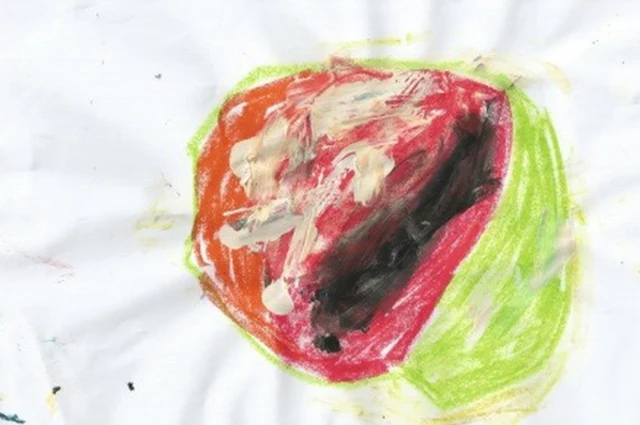
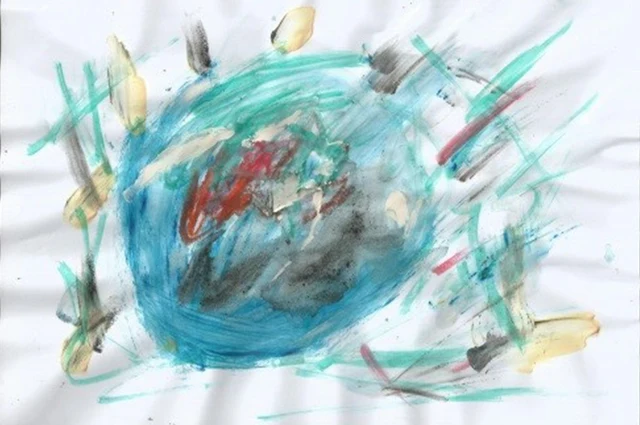
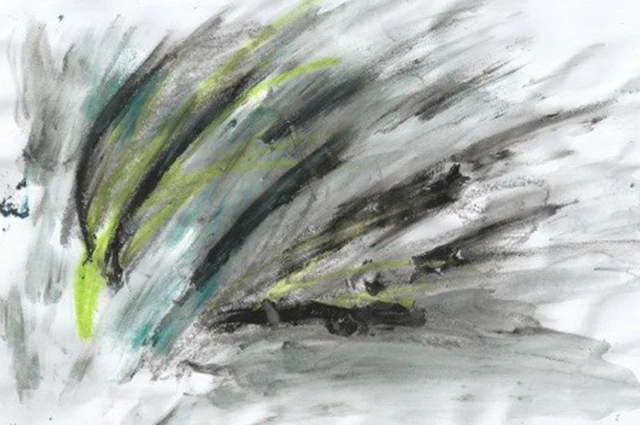
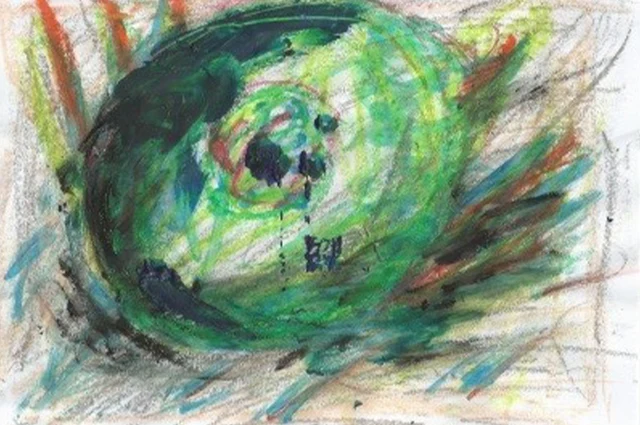
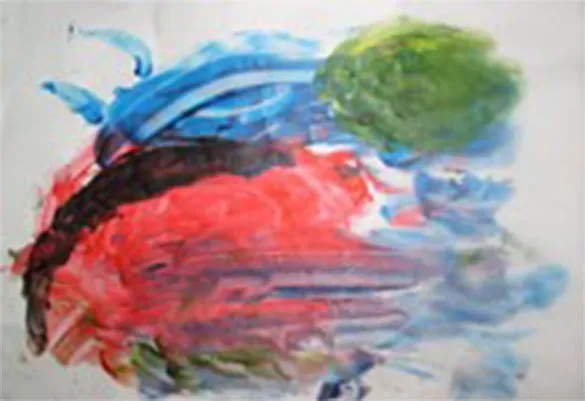
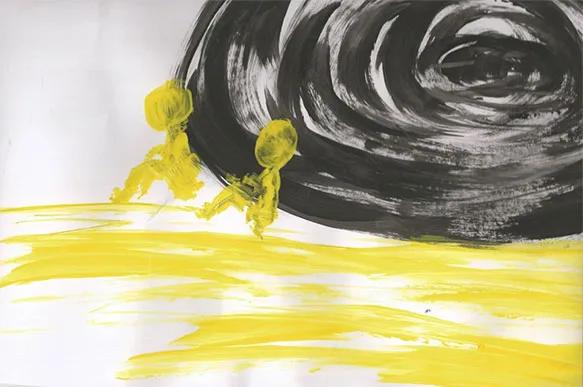
Therapy has room for every form of expression: mess, early forms, overwhelm, and things that do not yet have a clear shape. All of these matter and have a place.
Sometimes a drawing becomes more “beautiful” through the process, not necessarily in a technical sense, but because of the authenticity that emerges. Expression becomes more personal and alive, and there is greater courage to bring something of oneself. Such a process often expresses the trust and relationship developing between therapist and client, and often a sense of greater safety, closeness and openness.
Through this process, we can also learn to look at ourselves with compassion: to encounter what we have made with curiosity and acceptance, and feel what happens when we give criticism a little less space and allow ourselves to become more flexible.
This experience often opens a way to feel freer and safer in relationships outside the therapy room as well.
Arna, 50, came to therapy with a sense that something had been missed in her life, despite having developed a successful career. In sessions, she wanted her drawings to be beautiful and pleasing. Her first drawings were controlled and clearly bounded, and she tried not to reveal weaknesses and feelings.
Over time, Arna learned to recognise and let go of the need to draw beautifully, allowing herself more authentic expression. The conversations accompanying her art also brought up the criticism she had experienced from her parents, making her need for the drawings to be beautiful and successful more understandable.
Within the therapeutic relationship, through the therapist’s supportive, accepting gaze, Arna experienced the possibility of accepting her drawings as they were, and accepting herself too. Gradually, she became gentler with herself, more flexible and more able to flow with life. The sense of missed opportunities that had brought her to therapy also diminished.
And art therapy on Zoom?
Art therapy can also take place on Zoom, depending on a person’s needs and suitability. A private space and basic art materials are prepared in advance. The session combines conversation, creating and looking together at what has been made.
It is possible to begin with the fear, without knowing what to draw, and even when there are not yet words for what we feel. To let the hand leave a mark on paper and begin listening together to what arises.
I hope I have conveyed something of my curiosity and enthusiasm for the distinctive process of art therapy, and sparked your curiosity to encounter and experience it.
Brief questions and answers
Do I need to know how to draw to begin art therapy as an adult?
No. Art therapy for adults does not require talent or experience in drawing. You can begin even with the fear “I do not know how to draw”, and let your hand leave a mark on paper.
How does art therapy for adults differ from art therapy for children?
Children approach drawing playfully, with less criticism. Adults bring experience and depth, and sometimes also judgment of what they create. Therapy offers the opportunity to create in the presence of an accepting gaze, without needing the drawing to be beautiful.
Can art therapy for adults take place on Zoom?
Yes. Prepare a private space and basic art materials in advance. The session combines conversation, creating and looking together at what has been made.
 WhatsApp