
Art for the Soul – Art Therapy, Michal Bogin Feinberg
When the Drawing Speaks – What Is Art Therapy?
Art therapy uses visual artistic tools to communicate emotionally, in ways that words sometimes cannot. Art therapy is an emotional therapy involving growth, development, and awareness, through art materials, the power of creation, and the professional, supportive guidance of the therapist. Through therapy, it helps resolve conflicts, improve self-image, and give meaning to life. Art therapy emphasizes the process, so no special skills or abilities are required to participate.
There are things we sense deep inside, but they don't yet have words.
In therapy, they begin to take shape, color, and even words.
What Happens When Focusing Is Combined with Art?
In our sessions, I combine art with Focusing — listening to what arises in the body and to the inner felt sense. This combination allows deep, hidden content to surface and reveal itself in a creative and sometimes even surprising way. Through the process of listening and the images that emerge from the artwork, clarity and inner movement begin to form. A sense of inner center gradually replaces stuckness, confusion, or indecision. Slowly, an inner knowing becomes clearer — what is asking for a step forward, and what possibilities for growth and development are opening up.
I work with children and adults. Children with social difficulties, anxieties, and low self-image, and adults seeking to understand themselves through creation.
Who is the therapy for?
The therapy is tailored to each person according to their needs.
- Long-term therapy (children, teens, and adults) – an in-depth process as needed. Read more about art therapy for children | Read more about therapy for adults
People dealing with fears, indecision, feeling stuck, depression, traumas, or emotional challenges looking for a creative and personal way to cope. Questions and answers about the therapy
- Focused consultation – a one-time 1.5-hour session + follow-up meeting. A deep meeting designed for those at a crossroads, deliberating, or with a topic seeking clarity. The session combines conversation, Focusing, creative work with materials, and "Focus into the Soul" cards. The meeting can stand on its own, and sometimes also serves as the beginning of a process. Also available online
- Considering studying art therapy?
For those considering studying art therapy who want to experience it firsthand, explore whether the field is right for them, become familiar with the language of therapy, and develop tools to prepare for the admissions process. - Studying art therapy?
For art therapy students who want to process what they are learning and deepen their understanding through personal experience.
I taught art therapy at Lesley College and Beit Berl, and I support therapists as a senior supervisor accredited by YAHAT, the Israeli Association of Creative and Expressive Therapies.
What makes the therapy unique?
In art therapy, the drawing is an additional language — an intuitive language through which you can express things that aren't always easy to say out loud. The combination with Focusing allows listening to the body and sensations, and together with drawing and the accompanying conversation, a new path to self-understanding opens. The therapy is personally tailored — for each person according to their needs and pace.
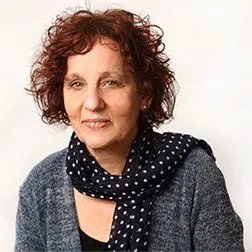
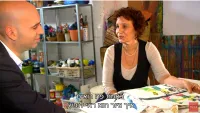
Michal Bogin Feinberg is an experienced art therapist. Author of the book "Do Not Disturb, I'm Drawing" – a fascinating encounter between the development of scribbles, lines, and the child's soul. Graduate of art studies at Beit Berl College and art therapy at the University of Haifa, psychotherapy studies in the psychoanalytic approach, parent group facilitation at Tel Aviv University, and Focusing certification from the International Institute in New York. She taught art therapy at Lesley College and Beit Berl. Today she provides art therapy for children and adults in a private clinic, lectures, and serves as a senior YAHAT supervisor for art therapists.
 WhatsApp
"Do Not Disturb, I'm Drawing"
A fascinating encounter between the development of scribbles, lines, and the child's soul
A book about the developmental process of children's drawings from age one and a half to six. It explains in accessible language how the child's psyche changes with each graphic change: when the circle is formed, when a dot is added inside it, what the transition from lines and "scribbles" to "real" drawings — flowers, figures, and houses — means, and why it matters so much.
After reading the book, you will look at children's drawings in a completely new way, and drawing will become a tool through which you can support and empower your children.

"Do Not Disturb, I'm Drawing" – How to help your child be confident and creative?
A lecture based on the book 'Do Not Disturb, I'm Drawing' – a fascinating encounter between the development of scribbles, lines, and the child's soul.
In the lecture, we'll learn to observe the parallel motor and emotional processes of the child, and discover that the order and connection between them is fascinating.
This understanding will help parents, educators, and therapists to view the child's drawings with greater curiosity, and their response will support the child's creativity and confidence.
The lecture is accompanied by a presentation with demonstrations and an opportunity for experiential exploration.
Focused Depth Meeting
A combination of conversation, creative expression, inner body listening (Focusing), and "Focus into the Soul" cards.
A focused session for anyone facing a dilemma, feeling stuck or overwhelmed — seeking a decision or direction. You leave with insight, strength, and a practical next step forward.
Learn more & book a session