
A new workshop for therapists
Rediscover what was lostA therapeutic tool for self-discovery through primary forms
An experiential Zoom session for therapists, exploring primary forms theory and Michal Bogin Feinberg’s approach to looking at drawings, combining Focusing, creative work and Focus into the Soul cards. In the workshop, we will practice observing the shapes that emerge and see how this same approach can help clients discover something new about themselves. Through many, many years of experience and exploration, I have found that this way of looking at primary forms and their meanings helps me see and understand drawings in a new light. I discovered that the primary and archetypal forms that emerged spontaneously on the page are like a code and a compass, helping me understand where I am today and what my direction is. I’d like to share this way of looking at drawings with you.
Like the “Where’s Wally?” game or the newspaper feature “Eifo HaYeled” (“Where’s the Child?”), we will look for shapes hidden in a drawing. In the game, everyone looks for the same character. Here, each of us may discover something different in the same drawing. As we look, we will draw on what we know about the universal and developmental meanings of shapes and pay attention to what each shape evokes in us. Looking at the drawing again, a shape that emerged without planning may draw our attention to a feeling or memory we had overlooked.
During one of my own explorations, I came to drawing with a sense of movement and excitement. A sea and a boat appeared in the drawing. Looking again, I noticed a horizontal and a vertical line meeting, and saw that a cross had formed. Alongside the movement, excitement and restlessness, I could also see balance and a meeting point, more than I had initially felt. This renewed observation opened another perspective on my experience.
After the discovery, it is worth asking: what does this observation add to our understanding of the drawing and our personal experience, what does it clarify, what seeks expression and what direction opens up?
Primary forms and their developmental and emotional meanings
Primary forms are like a key to observation - they open up the possibility of seeing, recognizing and forming a clearer idea of something that has not yet found words. They help free up the imagination and loosen familiar patterns. Michal’s distinctive approach, presented in her book “Do Not Disturb, I’m Drawing”, connects the development of forms in children’s drawings with the emotional processes developing as they grow. Scribbles, circles, dots and intersecting lines gain depth through observing how they emerge and change.
In the workshop, we will learn how to use this knowledge to look at our own drawings as adults and how to apply it in therapy with adult clients.
In the approach we will explore, shapes are like a personal code: an invitation to encounter feelings, experiences and memories, and discover the meanings that arise from them. Looking at how forms develop, as seen in children’s drawings, adds another layer to our questions: Where is the child I once was within me now? What quality is asking to re-emerge in my life? Where am I now, what is taking shape within me and what is my direction?
Discover a distinctive tool for understanding ourselves and our clients. Alongside professional learning, we will explore our own experience: meeting what is hidden, listening to what seeks expression and looking again for a path we may have lost.
Simplicity and primary forms as a way to discovery
Through intuitive drawing, we will observe and notice the primary forms that emerged by chance - lines, circles, intersections and other simple shapes.
These forms appear in the earliest stages of drawing development, arising from a basic, natural need to discover and explore the world around us through enjoyable, spontaneous play. Their very simplicity leaves room for imagination and for each person’s own meaning.
A line, a circle or an encounter between forms may evoke a feeling, a memory or an association. By pausing with what emerges, we may encounter something within ourselves that has grown distant - freedom, playfulness, a desire or a voice that has not found expression - and discover how to make room for it in our lives today.
The profound simplicity and the way of observing we will explore in the workshop can support and deepen therapeutic work. They allow more room for listening and pausing, and make space for meaning to emerge. This creates more room for the client’s personal expression, imagination and the direction developing from within.
As therapists, we sometimes feel that we need to hold the session, know, interpret and perhaps keep adding tools. Yet being present, making space and discovering meaning in simplicity can bring us closer to the person in front of us - and to ourselves as therapists.
Sometimes it takes courage to be simple. Simplicity does not mean giving up knowledge or professionalism. It allows us to trust the process more, listen more deeply and be more present in the session.
When a therapist allows themselves to bring simplicity and authenticity to a session and to begin with primary lines, their attention is open to what unfolds in the session.
What becomes possible for the therapist?
- More peace of mind and less effort to remain constantly in role.
- Sharper listening for the authenticity and emotion arising in the session.
- Trust in oneself, the client and the therapeutic process.
- Presence, connection and inward listening to what feels right in this moment.
What becomes possible for the client?
- Feeling that every line, emotion and expression has value and meaning.
- Being who they are without needing to impress or give the right answer.
- Developing confidence and the courage to try, imagine and discover.
- A space where the simple line becomes a starting point for expanding the client’s inner world through the meanings they find in it.
Can simplicity be taught?
Perhaps simplicity cannot be taught in the usual sense because it already exists within us. We can remove what conceals it, return our attention to it and practise the courage to trust it.
In a world that asks us to add more knowledge, another tool and another explanation, the workshop invites us to pause, observe and return to our own core through the first line, the simple form and the feeling that has not yet been interpreted.
Simplicity allows me to be who I am - and from there to expand, dare and grow.
The simple line does not restrict. It becomes an open foundation that clients can expand through their imagination, while the therapist holds the space without determining the destination in advance.
What happens in the workshop?
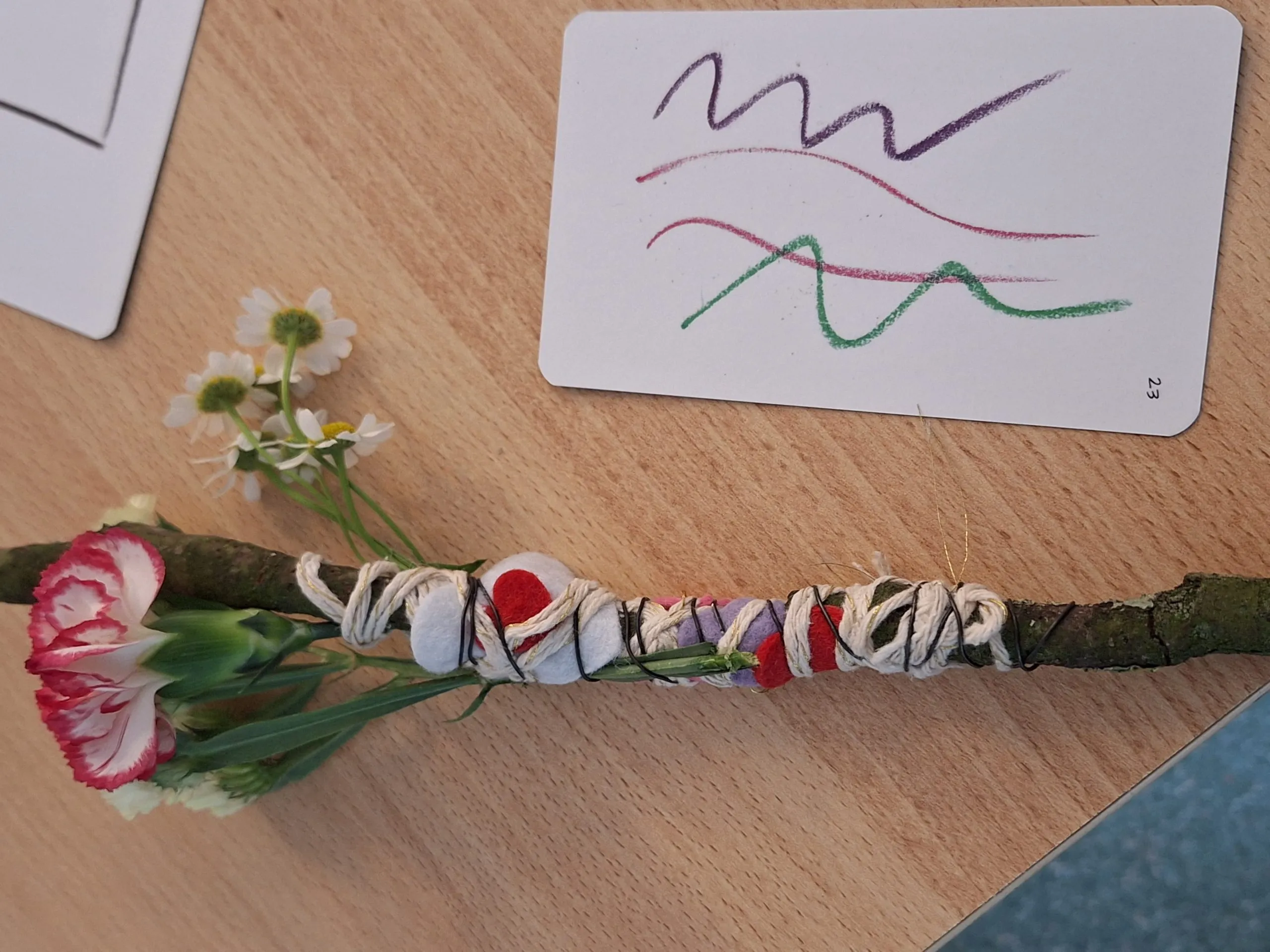
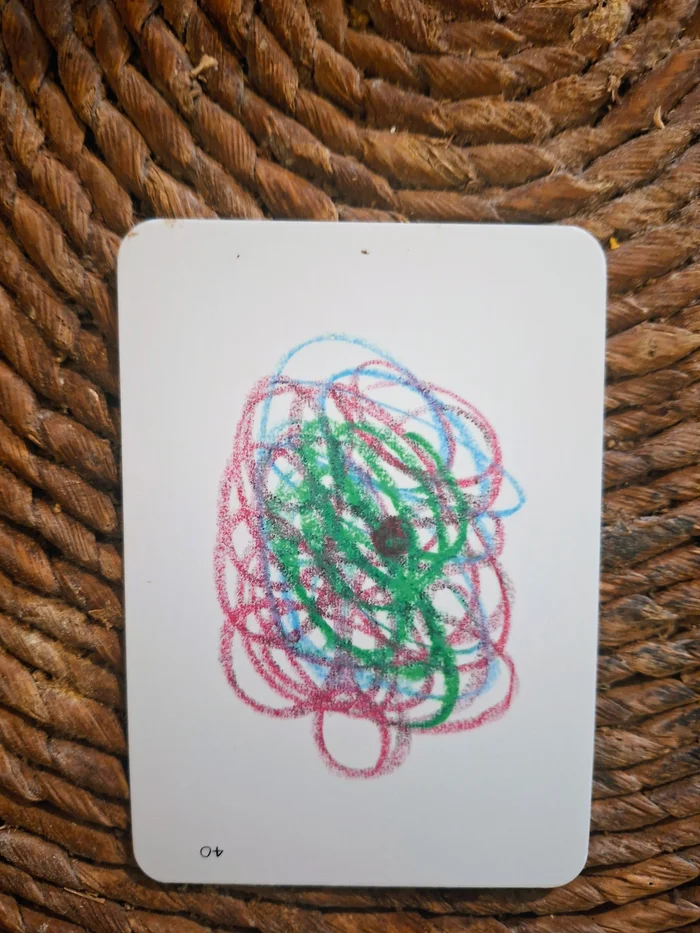
An experiential workshop combining observation, creative work and Focusing - listening to the body - with Focus into the Soul cards, which contain primary forms.
Using simple line, shape and colour, we will explore how to stay with observation and allow meanings to emerge. We will make space for imagination and explore how simplicity feels for me as a therapist and what it offers the client. We will explore how primary forms can act as an inner compass - bringing clarity to our experience, noticing what seeks expression, rediscovering something that may have been lost and finding a direction forward. Participants may bring personal dilemmas or dilemmas arising from something on their minds in their professional work for shared reflection.
What happens during the session?
- Begin with Focusing - how do I feel now? - and express that experience through drawing or scribbling.
- Briefly discuss the drawing, then look for the primary forms that emerged, clearly visible or suggested by the composition, and try to see what they reveal about us. We will also explore how these forms emerge and develop in children’s drawings, and the emotional and developmental meanings Michal describes in her book.
- Explore what this observation adds to what was already said, and how the forms in our drawings echo for us as adults the meanings encountered in children’s drawing development, while attending to personal meaning and the topic they chose to explore.
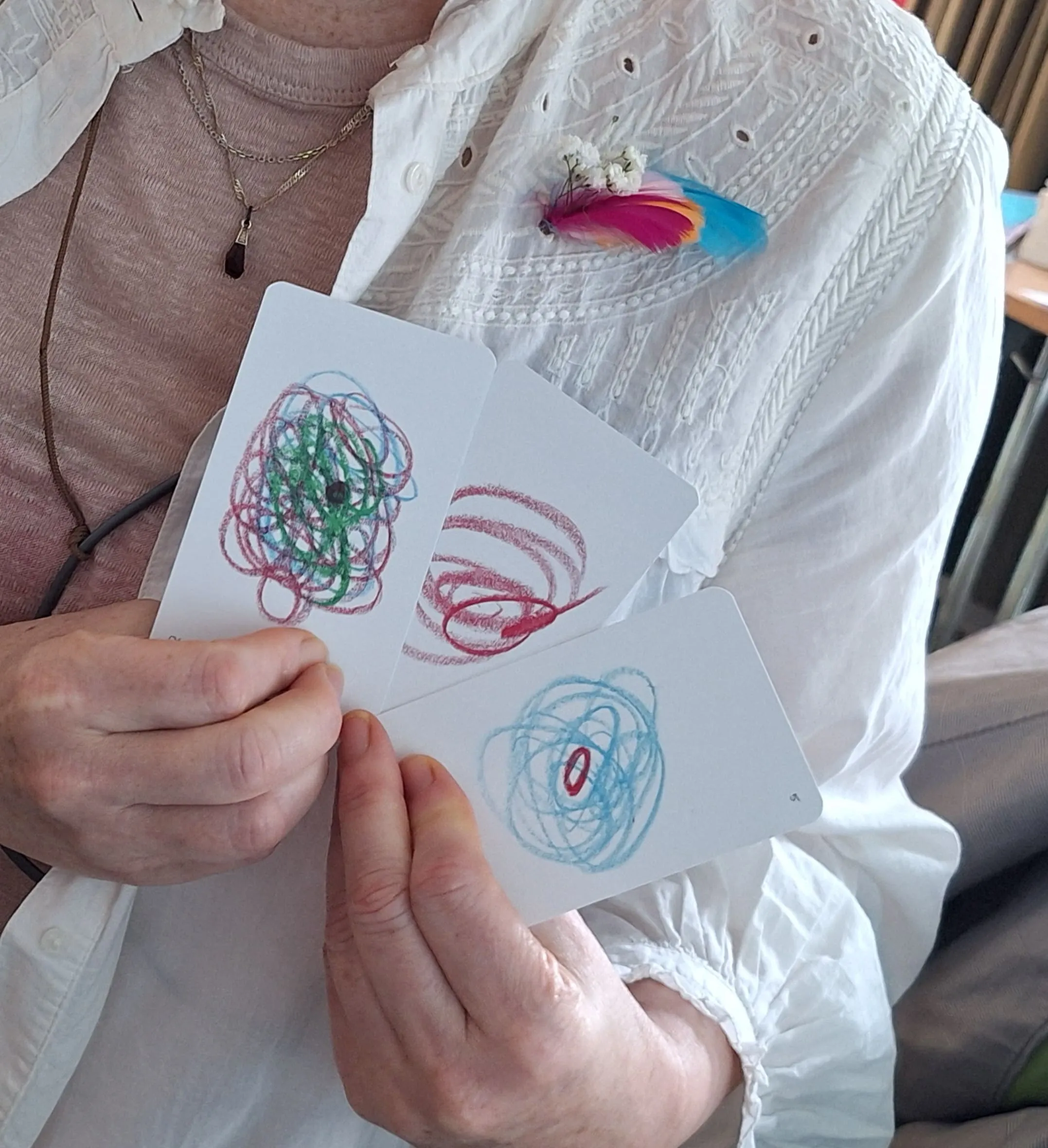
- Finish by exploring the Focus into the Soul cards and their primary forms: choose a card that resonates with us, and explore whether and how encountering it adds to the experience. We will also explore ways to use the cards in clinical practice: observing line and shape, listening to bodily sensations, asking open questions and deepening meanings through creative work, while supporting the client in discovering their own meanings.
The order of activities and what we focus on may vary depending on what comes up in the group.
What will we take from the session?
A distinctive way to observe primary forms and explore their developmental, emotional and personal meanings.
Shapes, much like a code and a compass, can help clarify where I am and my direction, give shape to feelings and thoughts seeking expression, and notice what was there but we had not yet seen, perhaps rediscovering something that was lost.
This is a tool for self-discovery and deepening our understanding of ourselves and our clients, which we can continue to practise ourselves and in clinical work.
The session is planned on Zoom in a small group of up to 15 people, to allow personal attention for each participant.
The session stands on its own and introduces the tool. No prior experience is needed. Introductory price: NIS 150. Those interested can continue the process. The cards and book will be available to purchase separately.
I personally respond to every inquiry within 24-48 hours.
 WhatsApp
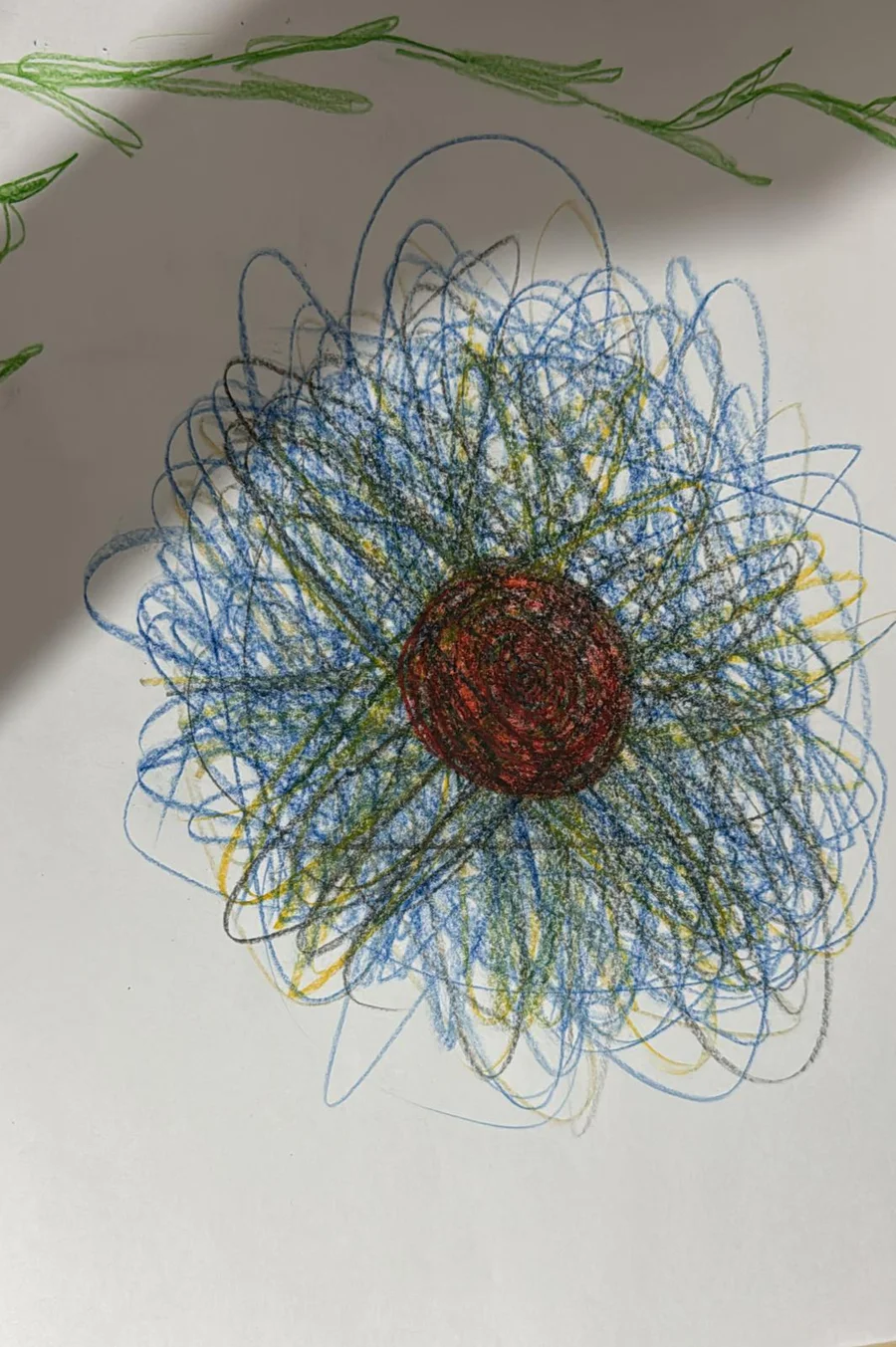
An example from a workshop: a drawing by a participant in a Zoom workshop for art therapy doctoral students, inspired by the accompanying Focus into the Soul card. She says of her drawing: Throughout the chaotic period of the war, my center saved me. At the top is a leaf of peace and hope.
Who is the workshop for?
Art therapists, psychotherapists, psychologists, social workers, counsellors, group facilitators, educators and other helping professionals.
Meeting formats
Invite an introductory lecture, a one-time experiential workshop or an ongoing process for professional teams and groups. Content and scope are tailored to each group.
Therapists share experiences from previous sessions and workshops
About an individual 90-minute depth meeting
From personal experience, I warmly recommend the hour-and-a-half depth meeting - the session was of very high quality, professional, and remarkably precise! For anyone who connects with body-mind work and art - and in any case - it is worth trying.

As an arts therapist working with children, the lecture and workshop opened a new window into the child's soul for me. Looking at the primary forms allows me to observe children drawing in therapy without judgment, with curiosity and joy, and to help children find their way freely and playfully toward development.
Thank you for a professional and fascinating lecture. The cards you developed are a powerful tool that uses the most basic forms known to people. Our brief introduction to them left me curious to explore and experience more.
Thank you for the generous simplicity that holds an entire world within it.
Deepen the approach and bring it into the clinic
The book, cards and workshops are different doors into the same approach: profound simplicity and the many meanings a simple form can hold.
Do Not Disturb, I'm Drawing
The book explores the development of primary forms and their emotional meanings. It offers a foundation for understanding the approach to observation we will experience in the workshop, and for further exploration in therapeutic work.
Explore the approach through the bookFocus into the Soul Cards
The Focus into the Soul cards invite us to observe primary forms and explore the personal meanings they evoke. In the workshop, we will use them as a starting point for expression, imagination and conversation, and explore ways to continue working with them in clinical practice.
Discover the therapeutic cardsWould you like to arrange a workshop for your team or join a session?
I invite you to leave your details to arrange a workshop, and I will get back to you soon.
I personally respond to every inquiry within 24-48 hours.