Art Therapy for Adults
Meeting yourself and creating movement from within
It's commonly thought that art therapy is meant for children. But for adults, the opportunity to express themselves through art becomes a unique chance — to bypass verbal thinking for a moment, connect with the inner world, and discover through creation things that can't always be said in words. Creation connects us to the present moment, deeply to ourselves and our emotions, and allows us to observe and discover about ourselves through the artwork. Furthermore, the act of creation itself has healing elements within it.
Drawing doesn't require talent or experience. It allows a person to connect with themselves through inner experience, observation, and the insights that may emerge.
How Does Art Therapy for Adults Work?
Words accompany the process according to the client's wishes: some prefer to draw first and talk afterward, some need conversation to open the way to creation, and some sessions remain in conversation alone.
I also incorporate principles from the Focusing approach, which help deepen listening to the inner experience, bodily sensations, and allow processes, insights, and clarity to emerge from within.
The therapy takes place in a private clinic in Neot Afeka, Tel Aviv, offering a safe, non-judgmental, non-interpretive space where one can encounter emotions, dilemmas, and life questions through creation, conversation, or a combination of both.
Returning to Early Stages
Adults generally have more awareness, depth, and complexity than children, but alongside these, a need sometimes arises to return to the earliest stages of creation.
Sometimes because they weren't fully experienced in childhood, sometimes from a desire to repair an experience, and sometimes from a longing for the primal, good place within us. Sometimes it's simply a natural cycle: returning to a more basic place from which one can grow again — in drawing and in life.
I personally respond to every inquiry within 24–48 hours.
 WhatsApp
A Developmental Perspective in Adulthood
In recent years, I've been integrating my developmental observation approach from children's drawings into understanding adult drawings. The developmental continuum continues to be present in adulthood as well.
Primal shapes like circles, crosses, and triangles may reappear, and sometimes they express deep emotional states: emotional flooding, confusion, a search for separateness, expression of an inner core, outward movement, and an encounter with the sense of "self."
An Example from Therapy — Noa
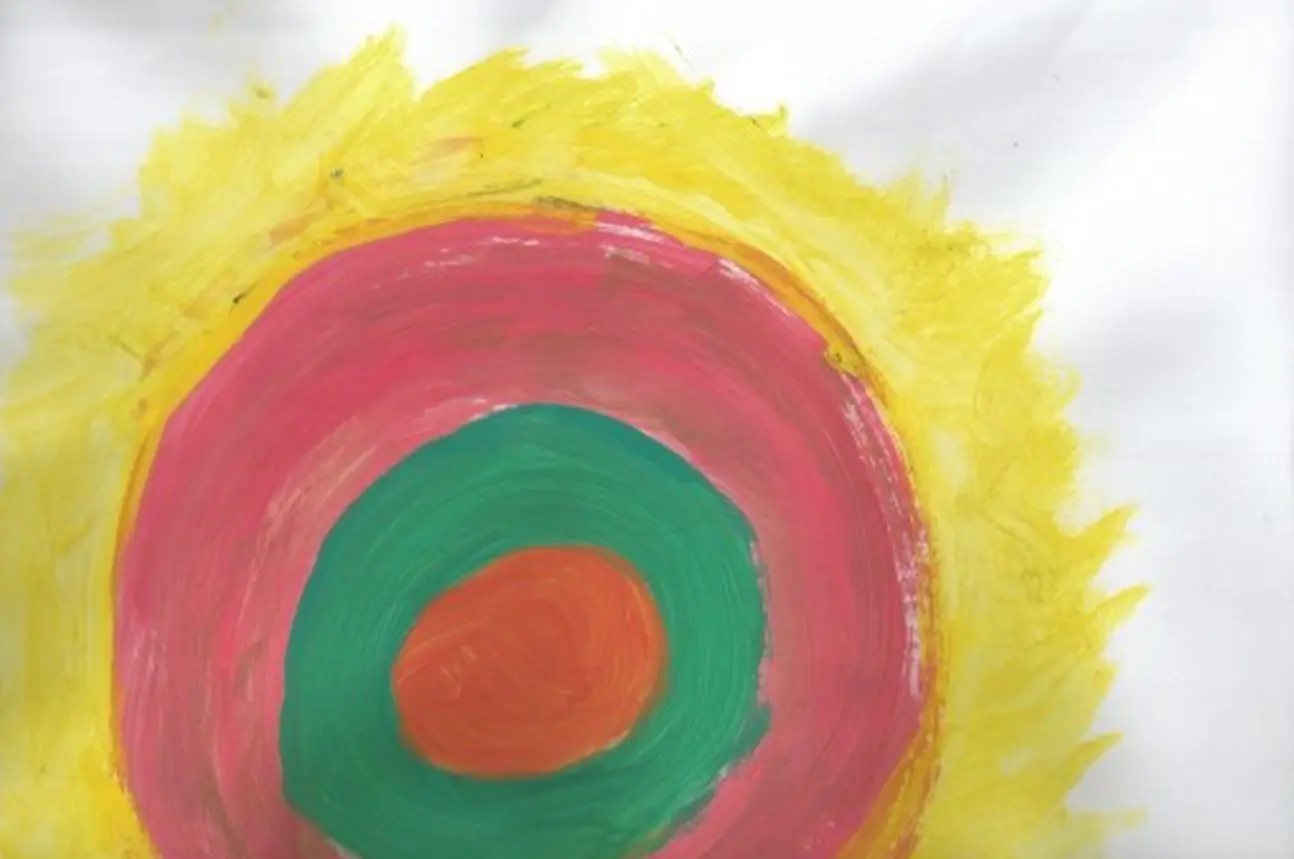
Noa, age 30, came to art therapy wanting to form a romantic relationship. At the beginning, her drawings were full of scribbles. From the spirals, a small circle began to emerge with an inner circle inside, representing her inner core.
Each time she saw it, she felt joy and confidence, as if a safe place had been created within her. Later, lines spontaneously appeared radiating outward from the circle, like sun rays.
"This is my breakthrough"
And indeed, this was the beginning of outward movement — both in life and toward forming a romantic relationship.
Another Example — Ariella
Ariella, a 50-year-old alternative therapist, came to art therapy wanting to fulfill a dream — establishing a school in her therapeutic field. She wanted to understand what was holding her back from making her dream a reality.
Through the drawings and observing them, blocks and boundaries she had set for herself emerged, along with difficulty touching the softness within her, and the discovery of gaps between her many real-world abilities and her difficulty being grounded. Gradually, Ariella went through a process of change that was also expressed in her drawing style: from rows and lines in felt-tip markers to soft shapes in smudged pastels. "Like a caress," she said about them.
Read the full description of Ariella's therapeutic process
I wrote extensively about this process and about the stages of development in my book "Do Not Disturb, I'm Drawing".
Explore the bookWho Is Art Therapy for Adults For?
The therapy is suitable for adults of all ages, even without prior experience in drawing or art. It may be especially fitting for those experiencing:
- Feeling stuck, confused, or searching for direction
- Emotional overload, stress, or anxiety
- Difficulty making decisions or understanding what's right for them
- Periods of transition or change in life
- Feeling disconnected from oneself or loss of vitality
- A need to process past experiences or significant relationships
And also:
- Those who feel drawn to create and find that creation touches deep places
- For those considering studying art therapy who want to experience it firsthand, explore whether the field is right for them, become familiar with the language of therapy, and develop tools to prepare for the admissions process
- For art therapy students who want to process what they are learning and deepen their understanding through personal experience
- Art therapists who want to undergo a personal process and deepen through experience
Frequently Asked Questions About Art Therapy for Adults
- Do I need to know how to draw for art therapy?
- No. Art therapy does not require talent or prior experience in art. Creation in therapy is a tool for expression and self-discovery, not an artistic product. The hand knows before the mind.
- What ages is art therapy suitable for?
- All ages — from early childhood through adulthood. For adults, their command of language gives them the opportunity through creation in therapy to have primary, new, and authentic experiences. Sometimes the language of emotions is hidden, and art is a beautiful way to discover it.
- What is the difference between art therapy and talk therapy (psychologist)?
- In art therapy, creating with art materials allows bypassing verbal thinking and connecting directly to the emotional world. The combination of conversation, creation, and observation deepens the process and allows discoveries that aren't always accessible through words alone.
- What issues can art therapy help with?
- Art therapy can help with a wide range of difficulties: low self-esteem, anxiety, depression, feeling stuck, life transitions, difficulty making decisions, emotional overload, and processing past experiences and relationships.
- How long does a therapeutic process last?
- The duration varies from person to person. Some come for a one-time Focused Depth Meeting (1.5 hours) that stands on its own, while others choose an ongoing process of weekly sessions. The decision is made together, according to individual needs.
Want to start with a focused session?
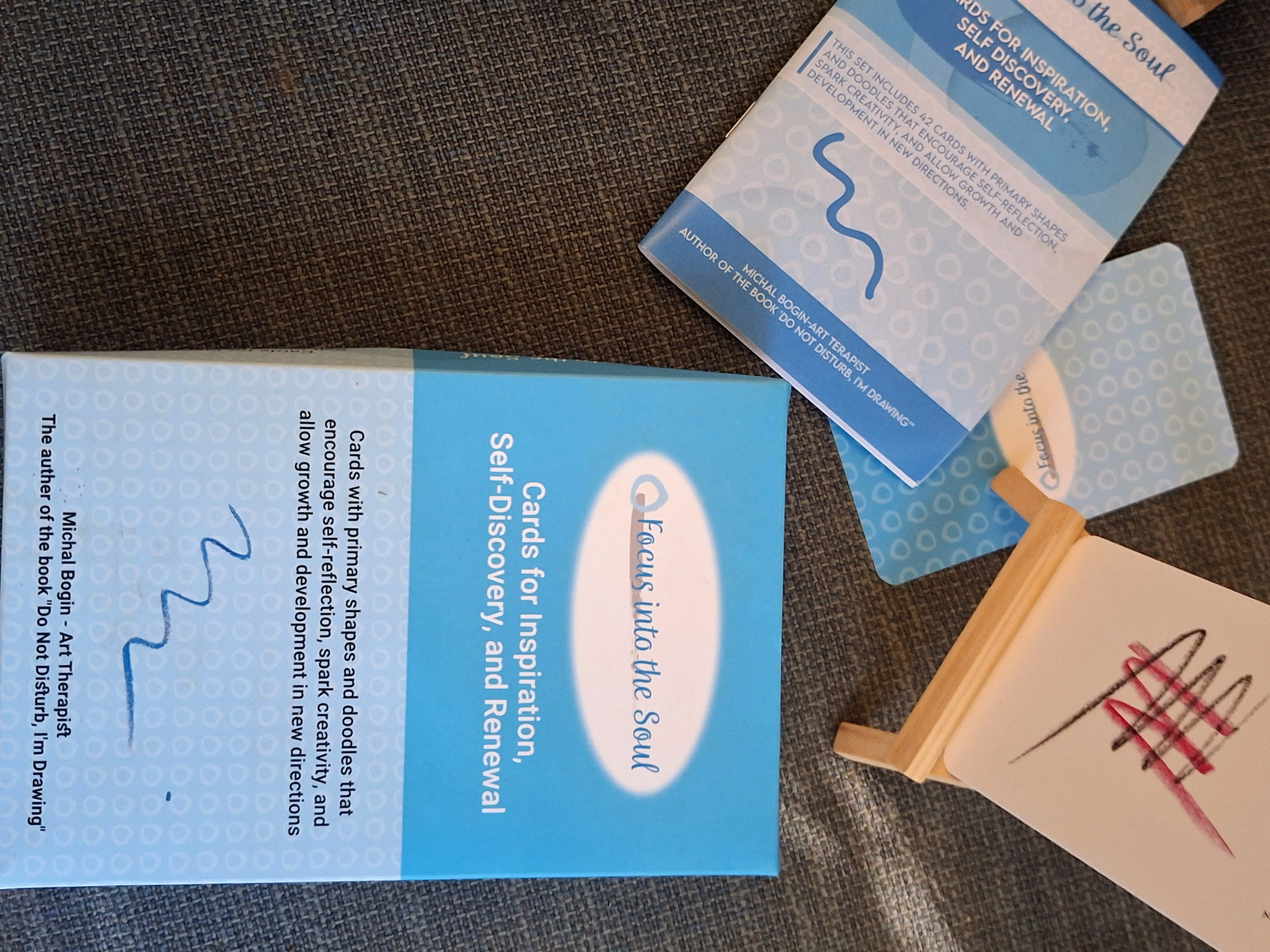
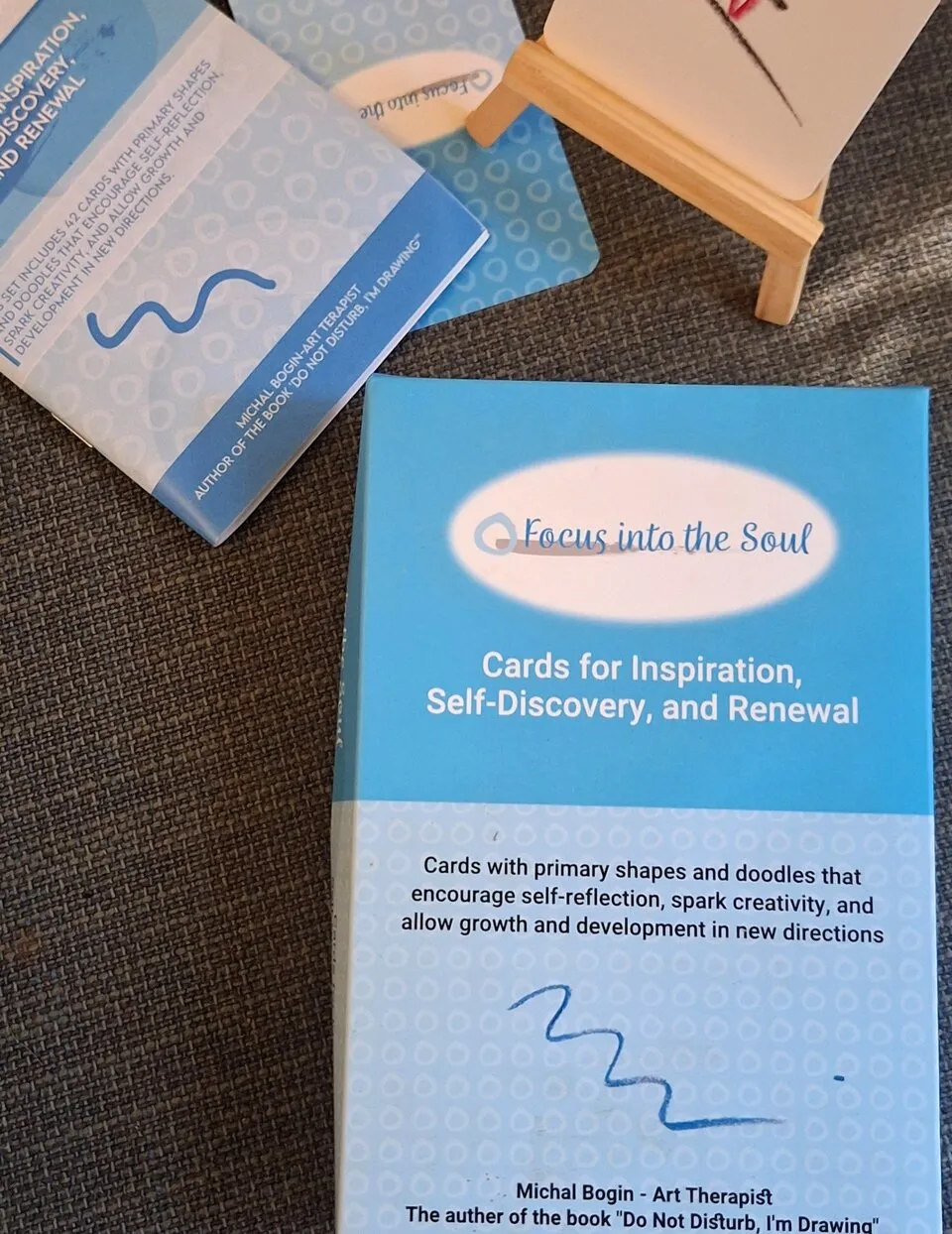
A one-time Focused Depth Meeting is a great way to begin — 1.5 hours of conversation, art, Focusing, and "Focus into the Soul" cards, followed by a follow-up session. The meeting can stand on its own, or serve as the beginning of a process. Available via Zoom from home or in-person at the clinic.
Learn about the Focused Depth MeetingIf you felt these words resonate with you, I'd love to have a short, no-obligation conversation to explore together whether this therapy is right for you.
I'd love to hear from youRead More
Art Therapy
Art therapy is an emotional therapy in which one undergoes a process of growth, development, and awareness, with the help of art materials and the power of creation…
Therapy Demonstration
A demonstration of an art therapy process, step by step, accompanied by drawings and insights from the therapy room…
Art Therapy and Focusing
The Focusing approach is based on a process of listening to inner experience, paying attention to body sensations and images that arise…Want to know more?
I'd be happy to meet, answer questions, and help you get started.
Contact us for a consultation and appointment Focused depth meeting